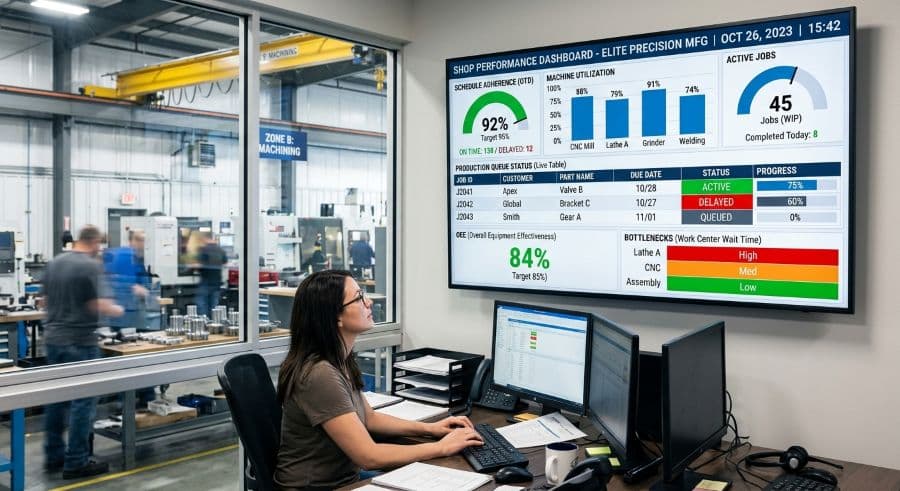
Production Scheduling
The 5 Production Scheduling KPIs Every Job Shop Should Track
Most job shops track OTD when a customer complains. The shops that consistently hit their due dates track five metrics weekly.
Rovaryn Digital
Read More →Blog
Practical articles for production managers and shop supervisors at SMB job shops and CNC machining centers.
Most job shops track OTD when a customer complains. The shops that consistently hit their due dates track five metrics weekly.
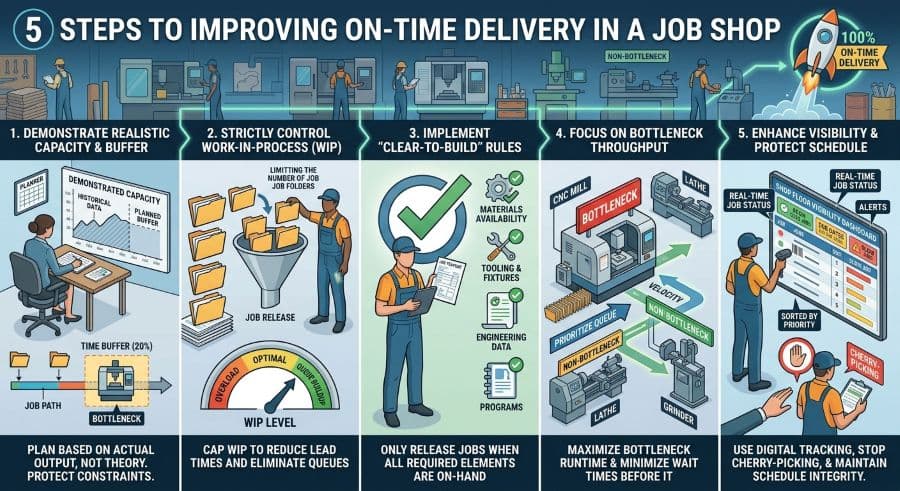
On-time delivery starts with knowing — before the customer calls — which jobs are at risk. Here's a 5-step guide to improving OTD starting this week.
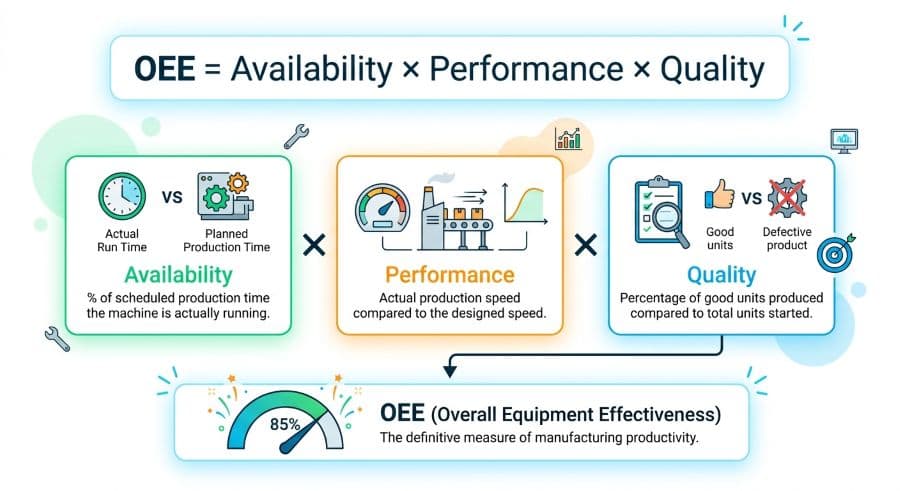
OEE is the most important machine metric most job shops never track. Availability × Performance × Quality = your real machine effectiveness.
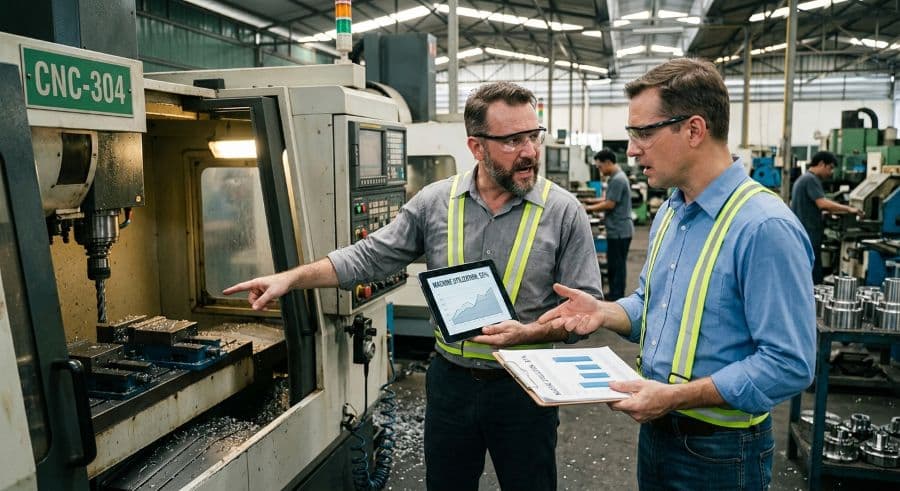
Machine utilization rate is one of the most important metrics in a job shop, but most production managers have no reliable way to calculate it. Here's…

A scheduling conflict that reaches the shop floor costs $250–$1,000 in machine restart, resequencing, and lost capacity.
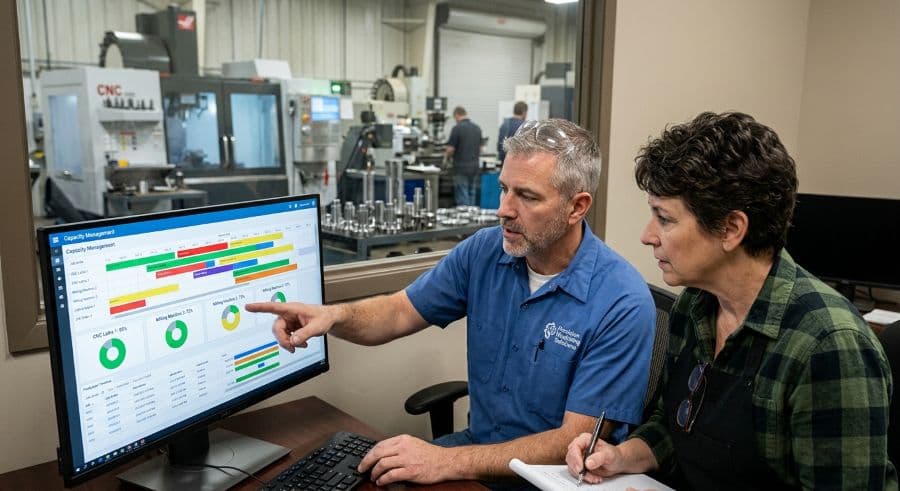
The most expensive words in a job shop: "Yeah, we can do that by Friday." Capacity planning means knowing before you commit.
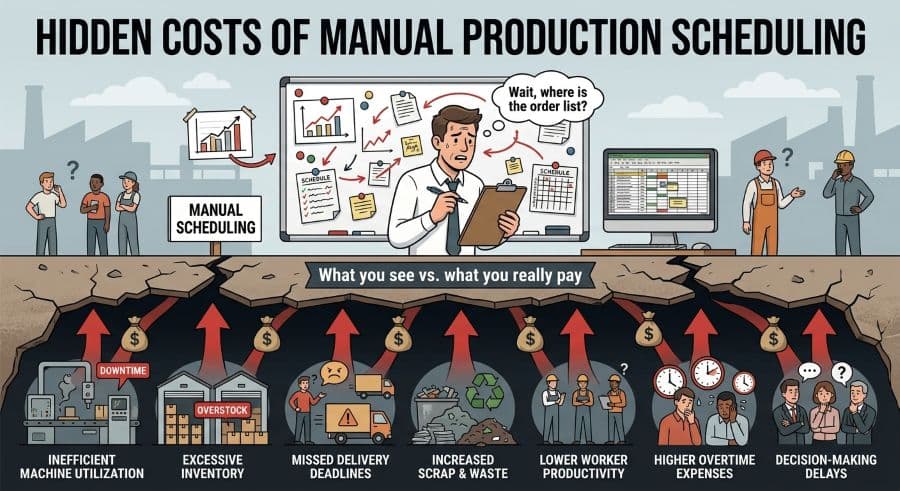
Most job shop owners know their whiteboard scheduling isn't ideal. Few have quantified what it's actually costing them. Here's the math.